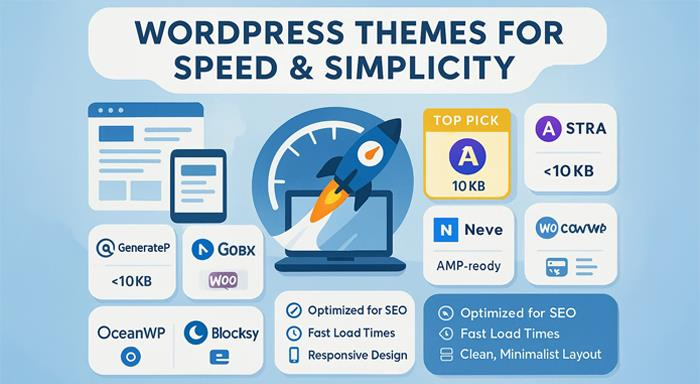
The Quest for Speed – Why Your WordPress Theme Must Be Lightweight
November 12, 2025
Hey there, fellow website adventurer! Let’s be real: we live in a “gimme it now” world. If your WordPress site takes longer than a blink to load, people are hitting the back button. It’s a harsh truth, but it’s the reality of the internet.
This is why, when you’re hunting for a new WordPress theme, your number one priority shouldn’t be how many dazzling features it has, but rather how lightweight it is. Think of your theme as the vehicle for your content. Do you want a speedy race car or a bloated, over-decorated bus? I’m betting on the race car.
A few years ago, the internet was flooded with what we called “multipurpose themes.” These themes were massive, promising everything but the kitchen sink: a thousand shortcodes, a built-in slider for every corner, half a dozen custom portfolio types, and enough animation scripts to start a cartoon studio. Sounds great, right? Wrong.
All that extra code, all those unused features, are what we call “theme bloat.” It’s like carrying around a backpack full of bricks. It slows you down, even if you never use the bricks.
1. The Bounce Rate Catastrophe
Studies consistently show that even a one-second delay in page load time can increase your bounce rate (the number of people who leave immediately) by double digits. People are impatient. A lightweight theme reduces the code your browser needs to download and process, getting your beautiful content in front of your visitor almost instantly.
2. Google’s Grumpy Face (SEO)
Google and other search engines care deeply about user experience, and speed is a massive part of that. Google specifically uses Core Web Vitals (metrics like Largest Contentful Paint, which measures loading speed) as a ranking factor. A lightweight theme is inherently structured to score well on these tests, giving you a natural advantage in search results.
3. The Plugin Problem Solved
Heavy themes often try to replicate the functionality of popular plugins (like contact forms or galleries), but they do it poorly. This can lead to conflicts when you install a real, high-quality plugin later. Lightweight themes, like Astra or GeneratePress, are essentially clean canvases. They are built to integrate seamlessly with any major plugin because they stick to core WordPress functions and don’t try to be everything at once. This means less debugging and fewer broken features.
How to Spot a Truly Lightweight Theme
You can’t just trust the marketing copy that says, “Fastest Theme Ever!” Here are a few tell-tale signs:
Minimal Front-End Size: The theme should load with a file size under 50KB. If the developer proudly boasts this number, that’s a good sign they prioritize performance.
Built-in Customizer Control: The theme should rely heavily on the native WordPress Customizer for all its settings (colors, fonts, header layout) instead of using a separate, bulky options panel. This keeps the code clean.
Page Builder Friendly, Not Dependent: The theme should work beautifully with Elementor, Beaver Builder, or Gutenberg, but you shouldn’t need the builder just to make a basic page layout.
The Demo Test: Try to run the theme’s demo site through an online speed checker like Google PageSpeed Insights or GTmetrix. If the official demo is slow, your live site will be even slower.
Your Lightweight Toolkit (No Bloat Allowed)
If you’re starting fresh, stick to themes that are famous for their speed and clean code. They might look simple at first, but that simplicity is their superpower; it gives you the room to add only the features you need, keeping your site fast and future-proof.
Themes to check out:
Astra: The titan of lightweight themes, known for its extensive library of speedy starter templates.
GeneratePress: A favorite among developers for its tiny footprint and clean, SEO-friendly code.
Kadence: Offers amazing speed coupled with an intuitive drag-and-drop header/footer builder right out of the box.
Never sacrifice speed for features you don’t need. A fast theme is the most reliable feature you can give your audience.