Why WordPress Will Continue to Rule the Web in 2025
December 27, 2025
For over two decades, WordPress has reigned supreme, powering more than 43% of all websites globally, from small blogs to massive corporate enterprises. As we look ahead to 2025, the digital landscape is saturated with competitors—from specialized SaaS platforms like Shopify to sleek, modern builders like Squarespace. Yet, experts agree: WordPress’s dominance is far from over.
Here is a deep dive into the five core reasons why WordPress remains the unparalleled king of Content Management Systems (CMS) and is set to maintain its massive market share.
1. The Block Editor Revolution (Gutenberg Maturity)
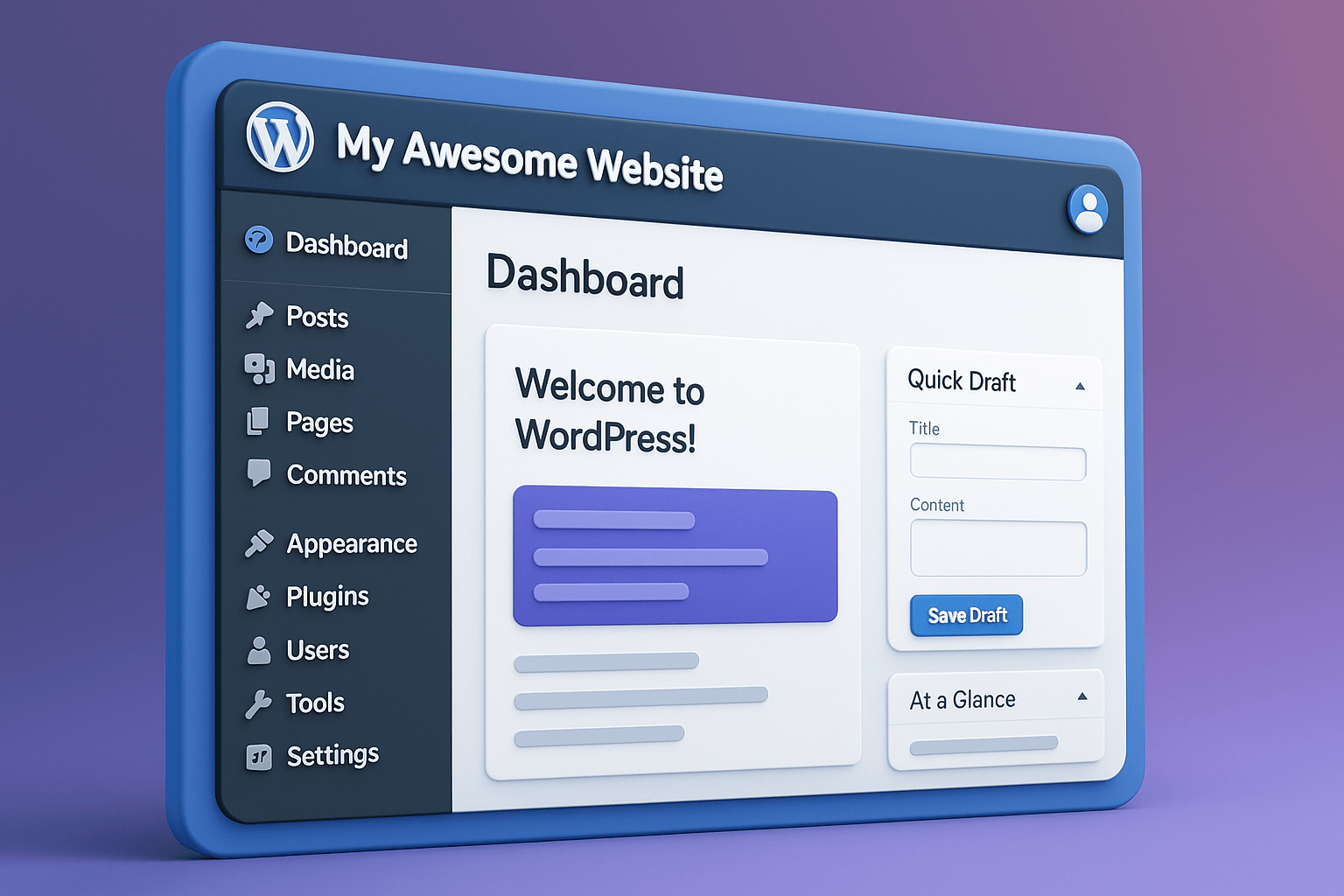
The single greatest factor ensuring WordPress’s longevity is the maturation of the Gutenberg Block Editor and Full Site Editing (FSE).
In previous years, critics often pointed to WordPress’s reliance on third-party page builders (like Elementor or Divi) as a sign of fragmentation. In 2025, that argument is obsolete. The native block editor is now powerful enough to handle complex layouts, headers, footers, and global styling entirely within the core system.
The Power of Core: FSE moves design logic away from bloated plugins and into the core of WordPress. This results in cleaner code, significantly faster page load times, and superior security.
Intuitive Design: The block system makes web design accessible to non-coders, enabling them to assemble complex pages using pre-made Block Patterns without ever touching HTML or CSS.
2. Unmatched Flexibility and Extensibility
No other CMS offers the same level of flexibility and extensibility as WordPress. This is its ultimate competitive advantage.
Adaptability: WordPress is not just for blogging; it’s a framework. It can be transformed into an e-commerce store (WooCommerce), a social network, a learning management system (LMS), a membership portal, or a professional portfolio site. The sheer volume of use cases is endless.
The Plugin Ecosystem: With over 60,000 free plugins and countless premium extensions, any functional requirement a business might have can be met. Competitors offer closed systems; WordPress offers an open-source universe.
Open-Source Advantage: Because it’s open-source, thousands of developers worldwide contribute to its security, functionality, and evolution, ensuring rapid adaptation to new web standards (like WebP images and structured data).
3. The Performance and Speed Renaissance
For years, WordPress was synonymous with being “slow.” That perception has drastically changed. The focus on performance is now a primary driver of the platform’s development.
Core Vitals Focus: WordPress is aggressively prioritizing optimization to meet Google’s Core Web Vitals (CWV). Modern, block-based themes are inherently lightweight and designed for speed.
API-First Approach (Headless WordPress): For large enterprises, WordPress is increasingly used in a “headless” capacity. The content is managed in the WordPress backend, but the front-end display uses ultra-fast frameworks like React or Vue.js. This combines the superior editing experience of WordPress with the blazing speed of modern programming languages. This innovation solidifies its place among enterprise-level solutions.
4. Superior Search Engine Optimization (SEO)
WordPress was built around content and has always had a strong advantage in organic search performance.
SEO-Friendly Architecture: From clean permalinks to well-structured HTML, WordPress inherently provides the best foundation for SEO.
Plugin Dominance: Powerful tools like Yoast SEO and Rank Math provide users with granular control over every aspect of on-page optimization, schema markup, and sitemap generation, features that are often limited or require proprietary upgrades on competing platforms.
Content is King: Since WordPress excels at content creation and organization, it naturally aligns with Google’s ongoing push to reward high-quality, well-maintained content.
5. Community and Developer Support
The global WordPress community is unmatched in size and commitment.
Longevity Guarantee: This massive community ensures that if a theme or plugin developer disappears, the platform itself will not. There will always be developers, resources, and documentation available.
Low Barrier to Entry: Because so many developers know the platform, the cost and effort of finding a professional to customize or maintain a WordPress site remain lower than for specialized, proprietary systems. This accessibility makes it the practical choice for agencies and freelancers globally.
In 2025, WordPress is no longer just a blogging tool; it’s a resilient, performance-focused, enterprise-ready platform. By continually embracing open standards, prioritizing speed, and empowering users with block-based design, WordPress ensures its longevity and its continued role as the foundation of the modern web.